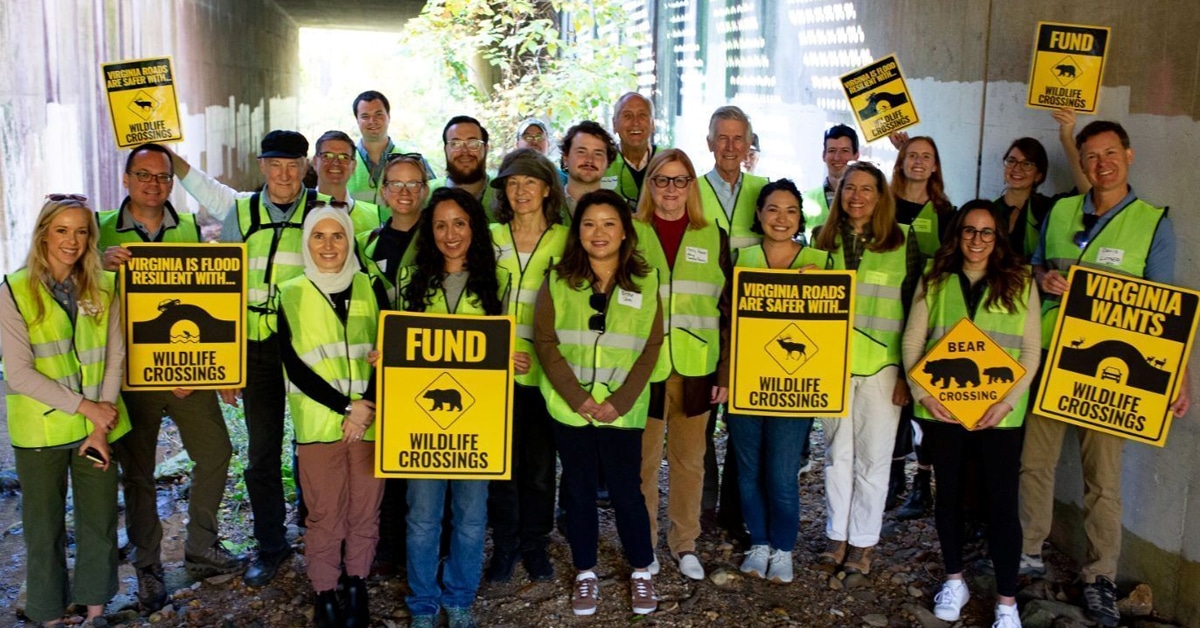
Virginia Takes Action to Protect Wildlife and Drivers with HB 597
Every year in Virginia, thousands of drivers collide with wildlife. These crashes cause serious injuries and deaths, and cost millions in property damage and emergency response.
Virginia ranks among the top ten states for wildlife-vehicle collisions, yet proven solutions exist. Properly designed wildlife crossings can reduce collisions by up to 96%, protecting both drivers and animals. Beyond road safety, wildlife corridors support healthy ecosystems, sustain outdoor traditions like hunting and birdwatching, and can even improve flood resilience through better water and aquatic habitat management.
This legislative session, Virginia lawmakers are considering HB 597, a bill that would move the Commonwealth from planning wildlife corridors to building them.
What HB 597 Would Do
HB 597 establishes the Wildlife Corridor Grant Fund, a dedicated funding source to support projects that protect and restore wildlife movement across roads and waterways. The fund would help state agencies implement Virginia’s Wildlife Corridor Action Plan and provide grants for projects that reduce collisions, conserve habitat, and save communities money on emergency response and property damage.
Importantly, the fund would be supported entirely through voluntary contributions. Virginians could choose to donate through electronic DMV transactions or on their state income tax returns, along with private donations. These dollars could also unlock federal grant funding by providing state match funds.
Why Wildlife Crossings Matter
Wildlife crossings are one of the most effective tools available to reduce dangerous collisions. Just one properly sited underpass combined with fencing can dramatically reduce crashes while restoring access to critical habitat.
These projects also deliver broader benefits. Wildlife crossings can improve stream connectivity for fish and aquatic organisms, support flood resilience by allowing greater water flow during storms and strengthen Virginia’s ability to adapt to climate change and biodiversity loss.
“If you drive on a Virginia highway, these wildlife corridor bills are for you,” said Delegate Simonds, HB597 Sponsor. “These bills are about bringing government agencies together and getting people out of their silos to improve driver safety and protect wildlife. The return on investment for wildlife corridor projects is incredibly high and we need everyone, from state planners to VDOT contractors, to be thinking about how can we reduce vehicle wildlife collisions. Just one underpass combined with fencing can reduce crashes by 96%.”
Broad Support Across Virginia
HB 597 has earned strong support from conservation organizations, outdoor groups, scientists, medical professionals, and community leaders across the state.
Wildlife crossing save lives, reduce taxpayer costs, and help maintain Virginia’s natural heritage. Medical professionals have highlighted the human toll of wildlife-vehicle crashes, while conservation groups stress the urgency of reconnecting fragmented habitats before losses become irreversible.
Wild Virginia’s Habitat Connectivity Program Director Trapper Fowler explains, “This bill advances Virginia’s progress towards safer roads for motorists and wildlife; wildlife crossings are common-sense approaches that will benefit everyone from hunters and anglers to the daily commuter. Wildlife and aquatic organisms are depending on us to maintain or reconnect their habitats through crossings and corridor connectivity projects; HB597 enables us to deliver!”
Take Action
Wild Virginia encourages residents and organizations across the Commonwealth to contact their Delegate and Senate representatives and urge them to support HB 597. By investing in wildlife crossings and corridor connectivity, Virginia can reduce crashes, protect biodiversity, and build a safer, more resilient future for people and wildlife.
Sample letter to send to representatives