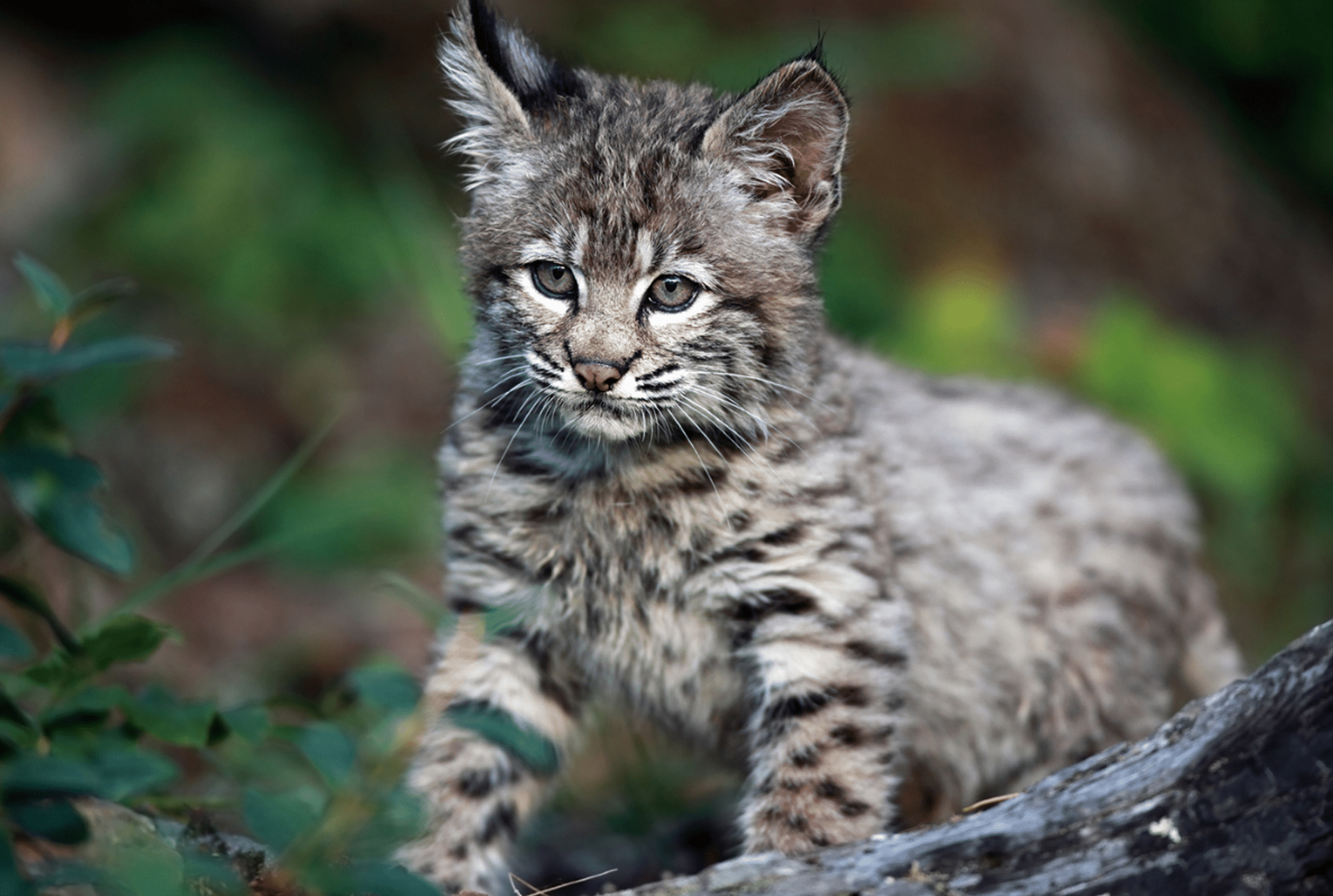
The Roadside Rescue of Two Bobcat Kittens Highlights a Larger Challenge for Virginia Wildlife
Two bobcat kittens were recently found sitting beside their mother on a roadside in Russell County.
Their mother had been struck and killed by a vehicle.
The kittens were fortunate. They were rescued and taken to the Southwest Virginia Wildlife Center, where they are now receiving the care they will need before they can eventually return to the wild. According to the Center, their rehabilitation will likely take nearly a year and cost more than $20,000.
Their story has a hopeful chapter, but it also stresses a problem that affects wildlife across Virginia every day.
For animals like bobcats, roads can be dangerous obstacles in landscapes they have traveled for generations. A road may impede wildlife movement altogether, creating a total barrier, or in this case force wildlife to cross traffic in search of food, water, shelter, or mates.
Too often, those crossings end in tragedy.
While deer collisions receive the most attention, Virginia’s roads also take a toll on bears, turtles, salamanders, foxes, otters, bobcats, and countless other species. Every wildlife-vehicle collision affects not only the individual animal but, in some cases, entire families.
In this case, the loss of a mother bobcat left two young kittens dependent on human intervention for survival.
Wildlife rehabilitators provide an invaluable service when these situations occur. The staff and volunteers at the Southwest Virginia Wildlife Center are giving these kittens a second chance, but rehabilitation is only one part of the solution.
Preventing these collisions in the first place is even better.
Wildlife crossings are structures such as underpasses, overpasses, and specially designed culverts that allow animals to move safely across roads. When combined with fencing that directs animals toward crossing locations, these projects have been shown to reduce wildlife-vehicle collisions by as much as 96 percent.
In addition to saving wildlife, crossings also improve driver safety, reduce property damage, and reconnect habitats that have been fragmented by roads and development.
Advocating for wildlife crossings and connected wildlife corridors is central to Wild Virginia’s mission of protecting healthy, resilient ecosystems across Virginia. This year, Virginia took a landmark step forward by establishing the Wildlife Corridor Grant Fund, creating new voluntary donation opportunities to support projects that help wildlife move safely through the landscape, effective July 1, 2026.
Two bobcat kittens are getting a second chance, but their mother’s death highlights the importance of making wildlife crossings commonplace and a priority in the first place.