You Did It! Two Conservation Bills Pass the Virginia General Assembly
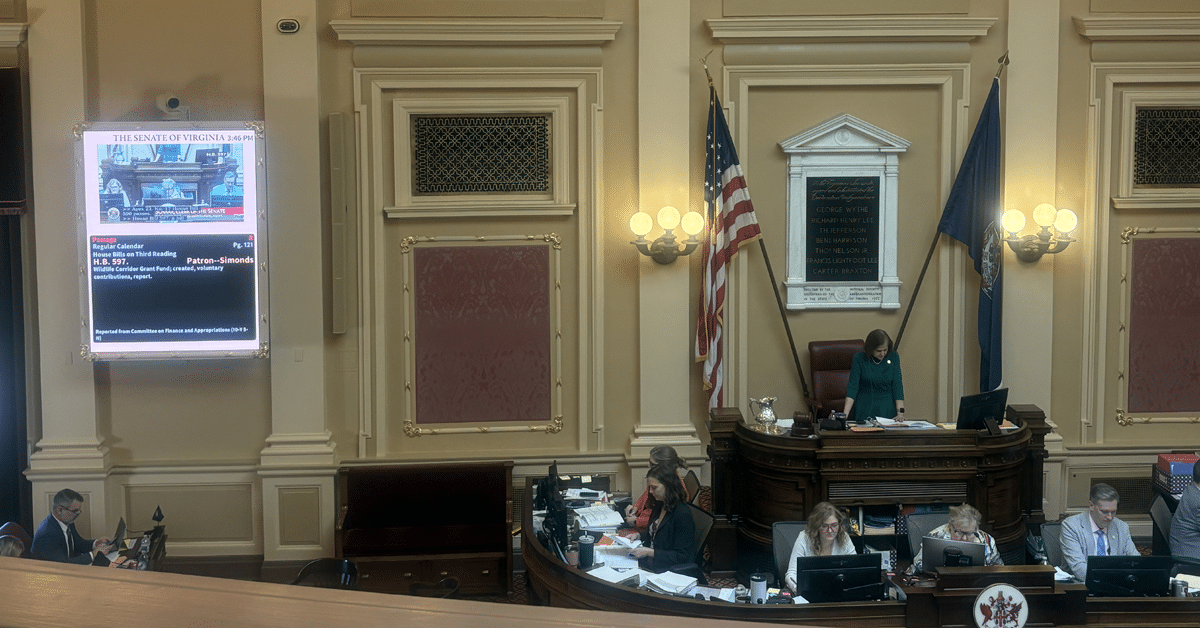
Thanks to the voices of Wild Virginia supporters and partners across the Commonwealth, two important conservation bills have passed the Virginia General Assembly.
HB 597 and HB 1073 represent significant progress for both wildlife protection and public safety. These bills will help improve habitat connectivity, reduce wildlife vehicle collisions, and strengthen oversight of natural gas pipelines operating in Virginia.
Advocacy from community members played an important role in moving both efforts forward. Emails, phone calls, and conversations with legislators helped demonstrate strong public support for practical solutions that protect both people and the natural systems we depend on.
HB 597 Establishes the Wildlife Corridor Grant Fund
HB 597, introduced by Delegate Shelly Simonds, creates the Wildlife Corridor Grant Fund, a new funding source to support projects that improve wildlife movement across Virginia’s increasingly fragmented landscape.
Virginia ranks among the top states in the nation for wildlife vehicle collisions. Properly designed wildlife crossings such as underpasses, overpasses, and culverts can dramatically reduce crashes.
The Wildlife Corridor Grant Fund will help support projects that reduce collisions and advance implementation of Virginia’s Wildlife Corridor Action Plan.
Importantly, the funding structure relies on voluntary contributions rather than state appropriations. Virginians will have the option to donate through DMV transactions or on state income tax returns, along with private contributions. Establishing the fund will also allow Virginia to compete for federal and private grants that require state matching funds.
“Wildlife crossings are common sense solutions that protect both motorists and wildlife,” said Trapper Fowler, Habitat Connectivity Program Director at Wild Virginia. “Virginia has already done the planning through the Wildlife Corridor Action Plan, and establishing this fund helps move that work from planning to real projects on the ground. We’re grateful to the legislators, partner organizations, and advocates across Virginia who helped make this possible.”
HB 1073 Strengthens Pipeline Leak Detection Standards
HB 1073, introduced by Delegate Sam Rasoul, requires the State Corporation Commission to establish regulations that impose advanced leak detection requirements and stronger repair standards on certain intrastate natural gas pipelines.
Pipeline leaks can pose serious risks to public safety and contribute to harmful methane emissions. Strengthening monitoring and repair standards helps ensure that leaks are identified earlier and addressed more quickly.
The legislation directs the Commission to adopt regulations informed by ongoing federal rulemaking on gas pipeline safety. In the meantime, the new requirements will help improve oversight of natural gas infrastructure operating within the Commonwealth.
“People expect the infrastructure running through their communities to be safe and properly maintained,” said David Sligh, Wild Virginia’s Water Quality Program Director. “Stronger leak detection and repair standards are a practical step toward protecting Virginians and our environment. We appreciate the legislators, partner organizations, and community members who spoke up and helped move this bill forward.”
A Win for Wildlife and Safer Communities in Virginia
Together, these two bills reflect growing recognition that conservation, public safety, and responsible infrastructure management must go hand in hand. Protecting wildlife habitat, improving road safety, and strengthening pipeline oversight all contribute to healthier ecosystems and safer communities.
Wild Virginia is grateful to the legislators who championed these efforts, the partner organizations who worked alongside us, the staff who helped guide these bills through the legislative process, and the many supporters who contacted their representatives and spoke up for conservation across the Commonwealth.
We will continue to share updates as these bills move forward to the Governor’s desk.